
Bladder Procedures:
Diagnosis, Treatment, and Modern Care
Dr. Ram Prasad Cherukumalli
Urologist & Robotic Surgeon
- May 25, 2026
- 7:46 AM

Reviewed By
Dr. Ram Prasad Cherukumalli
Urologist & Robotic Surgeon
✓ Advanced Robotic Surgery
✓ Minimally Invasive Procedures
✓ Apollo Health City
✓ Apollo Clinic Manikonda
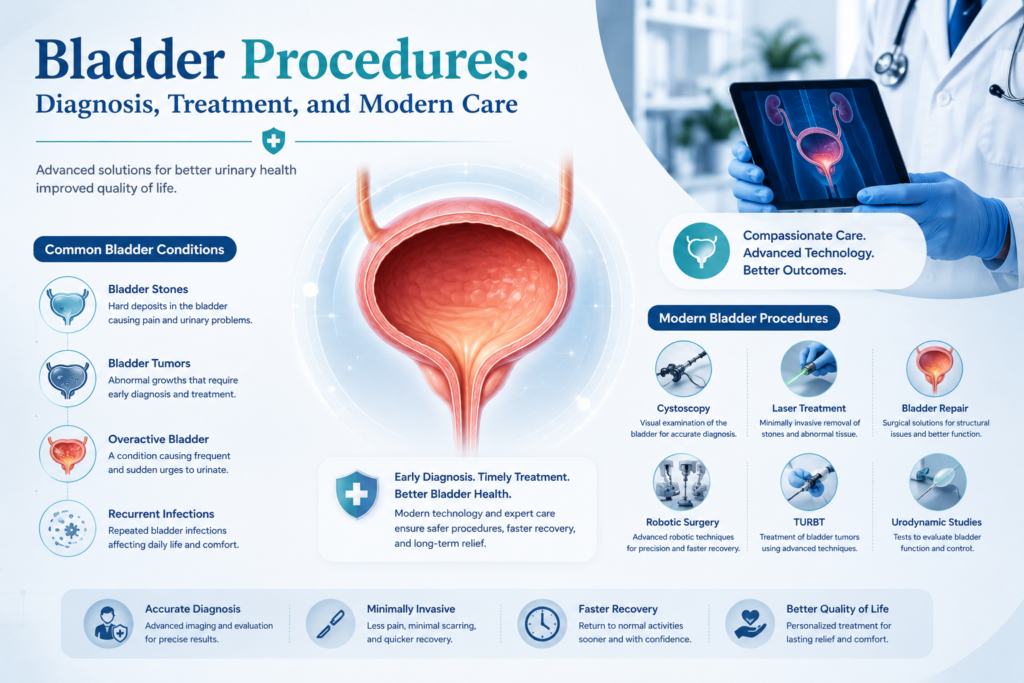
The bladder is a crucial part of the urinary system, responsible for storing urine produced by the kidneys and releasing it from the body at the appropriate time. When bladder function is affected by infections, stones, tumors, or structural abnormalities, patients may experience significant discomfort and a reduced quality of life. Fortunately, advances in modern urology have made bladder procedures safer, more precise, and highly effective. Early diagnosis and timely treatment can help prevent complications and support long-term urinary health.
Common Bladder Problems
Several bladder conditions can affect individuals of all ages and may require evaluation by a qualified urologist.
Bladder Stones
Bladder stones are hard mineral deposits that develop when urine remains in the bladder for extended periods. Symptoms may include lower abdominal pain, frequent urination, painful urination, difficulty emptying the bladder, and blood in the urine. If left untreated, bladder stones can lead to recurrent infections and urinary obstruction.
Bladder Tumors
Bladder tumors may be benign or cancerous and often present with symptoms such as painless blood in the urine, frequent urination, or urinary discomfort. Early detection plays a critical role in successful treatment outcomes and long-term bladder health.
Urinary Tract Infections (UTIs)
Recurrent urinary tract infections can irritate the bladder lining and affect normal bladder function. Persistent infections should always be evaluated to identify underlying causes and prevent long-term complications.
Overactive Bladder
Overactive bladder is characterized by a sudden urge to urinate, increased urinary frequency, and, in some cases, urinary leakage. The condition can significantly affect daily activities, sleep quality, and overall well-being.
Structural Abnormalities
Narrowing of the bladder outlet, urethral strictures, or other structural abnormalities can interfere with normal urine flow and may require specialized treatment to restore proper bladder function.
How Doctors Diagnose Bladder Conditions
Accurate diagnosis is the foundation of effective treatment. Modern urology utilizes advanced diagnostic technologies to identify bladder disorders and determine the most appropriate treatment plan.
Ultrasound & CT Scans
Imaging studies help detect bladder stones, tumors, urinary tract obstruction, and structural abnormalities. These non-invasive tests provide detailed information about the urinary system.
Urine Tests
Urinalysis and urine culture help identify infections, blood in the urine, and abnormal cells that may indicate underlying bladder disease.
Cystoscopy
Cystoscopy is one of the most important diagnostic procedures in urology. A thin, flexible scope is inserted through the urethra to directly examine the bladder lining and identify abnormalities such as tumors, inflammation, bleeding, or stones.
Biopsy
If suspicious tissue is identified during cystoscopy, a biopsy may be performed to obtain a sample for laboratory analysis. This helps confirm or rule out bladder cancer and guides further treatment decisions.
Common Bladder Procedures
Cystoscopy
Cystoscopy is a minimally invasive procedure used to evaluate the bladder and urethra in detail. It allows urologists to diagnose and sometimes treat various bladder conditions during the same procedure.
Benefits of cystoscopy include:
• Detection of bladder tumors and abnormal growths
• Identification of bladder stones
• Evaluation of blood in the urine
• Investigation of recurrent urinary infections
The procedure is typically performed under local or short-duration anesthesia and usually allows patients to return home the same day.
Bladder Stone Removal
Bladder stone treatment has advanced significantly with modern minimally invasive techniques. Stones can be fragmented using laser technology or specialized ultrasound devices and then removed through the urinary passage without the need for large surgical incisions.
This approach offers:
• Reduced discomfort
• Faster recovery
• Minimal scarring
• Improved patient outcomes
Transurethral Resection of Bladder Tumor (TURBT)
TURBT is considered the standard procedure for diagnosing and treating bladder tumors, particularly early-stage bladder cancer.
During the procedure, the tumor is removed using specialized instruments passed through a cystoscope. The removed tissue is then examined under a microscope to determine the stage and grade of the disease.
TURBT plays a vital role in both diagnosis and treatment while helping preserve normal bladder function whenever possible.
Bladder Biopsy
A bladder biopsy allows specialists to obtain tissue samples for detailed pathological examination. This procedure is essential when bladder cancer, chronic inflammation, or other abnormal conditions are suspected.
Accurate biopsy results help guide personalized treatment strategies and ensure timely intervention.
Bladder Reconstruction & Augmentation
In patients with severe bladder dysfunction, reduced bladder capacity, or damage caused by injury, disease, or previous surgery, reconstructive procedures may be recommended.
Bladder augmentation and reconstruction aim to:
• Improve bladder capacity
• Restore urinary function
• Reduce symptoms and complications
• Improve quality of life
These procedures are carefully tailored to each patient’s individual condition and treatment goals.
Advanced & Robotic Bladder Surgeries
Robotic-assisted bladder surgery represents one of the most significant advancements in modern urology. Robotic technology provides surgeons with enhanced precision, improved visualization, and greater control during complex procedures.
Benefits of robotic bladder surgery may include:
• Smaller incisions
• Reduced blood loss
• Less post-operative discomfort
• Faster recovery times
• Shorter hospital stays
Robotic techniques are particularly valuable for bladder cancer surgery and complex reconstructive procedures where surgical precision is critical.
Recovery and Follow Up
Successful recovery depends not only on the procedure itself but also on proper post-operative care and follow-up.
Patients are generally advised to:
• Stay well hydrated to support urinary tract healing
• Avoid smoking and excessive alcohol consumption
• Follow prescribed medications and antibiotics carefully
• Avoid strenuous activities during the initial recovery period
• Attend scheduled follow-up appointments and cystoscopies when recommended
For patients treated for bladder cancer, regular surveillance is essential to monitor for recurrence and maintain long-term bladder health.
🌟 Takeaway
Bladder procedures range from simple diagnostic evaluations to advanced robotic-assisted surgeries designed to treat complex urinary conditions. Whether addressing bladder stones, recurrent infections, tumors, or structural abnormalities, modern urology offers highly effective treatment options with excellent outcomes. Early diagnosis, expert care, and ongoing follow-up remain the key to preserving bladder function and maintaining long-term urinary health.
Ready to Consult Dr. Ram Prasad?
Expert diagnosis, advanced urological care,
and personalized treatment plans.
Posted on Google
 harinath p l
Trustindex verifies that the original source of the review is Google.
Good explained by doctorPosted on Google Kondepati NareshDr. Ram Prasad Cherukumalli is simply the best doctor I have ever met! He treated my kidney stones and urinary issues with incredible skill and patience. He listens, explains clearly, and truly cares about his patients. If you need a urologist in Hyderabad, he is the one to go to. An absolute blessing! Highly recommended! 🙏Posted on Google
 sadat merajBest doctor I had ever met till date. Such a kind and polite doctor. He treats patients with a smile and after treatment that smile appears on patients face. Such a kind human and experienced doctor he is.Posted on Google
 N Harishwar ReddyI am very thankful to Dr. Ram Prasad Cherukumalli for the excellent treatment given to my mother. She had a 17 mm kidney stone, and we were very worried about her condition. Dr. Ram Prasad explained everything clearly, guided us with confidence, and performed the procedure smoothly. He is known for treating kidney stone cases with minimally invasive techniques and personalized care.Posted on Google
 Chandu RWe are extremely grateful for the care and expertise provided by Dr. Ramprasad during our son's hydronephrosis treatment. From our very first consultation, he was patient, compassionate, and highly knowledgeable. He took the time to carefully listen to our concerns and thoroughly explained our son's condition in a way that was easy to understand. When he recommended a few diagnostic tests, we were naturally anxious and somewhat skeptical given our son's young age. However, Dr. Ramprasad patiently addressed all our questions, reassured us, and helped calm our nerves. What truly stood out was his commitment throughout the testing process. Over the four days during which the tests were conducted, he proactively followed up with us, checked on our son's progress, and remained available to answer any concerns. This level of attention and care made a significant difference and gave us tremendous confidence during a stressful time. His professionalism, expertise, and genuine concern for our son's well-being gave us the trust and peace of mind we needed. Thanks to his guidance and care, we felt supported every step of the way. We highly recommend Dr. Ramprasad to any patient seeking a knowledgeable, caring, and trustworthy specialist. He is truly an exceptional doctor.Posted on Google
 harshavardhan kattaI had an excellent experience with Dr. Ramprasad during a very difficult time for my dad. From the very first phone call, he provided immediate guidance and reassurance, which gave us great confidence and relief. As soon as we reached Apollo Jubilee Hills Hospital, he personally ensured that my dad received prompt attention and expedited treatment without any delay. His professionalism, dedication, and compassionate approach were truly remarkable throughout the entire process. I highly recommend Dr. Ramprasad…Posted on Google
 Vijaya VanaparthiI had an amazing experience with Dr. Ramprasad From the very first consultation, I felt comfortable and in safe hands. The doctor is highly knowledgeable and takes the time to explain the diagnosis and treatment options thoroughly. Thanks to their excellent care, I feel much better now. Highly recommended for anyone looking for a top urologist!"Posted on Google
 nunna rakeshI had an excellent experience with Dr. Ramprasad during a very difficult time for our family. From the very first phone call, he provided immediate guidance and reassurance, which gave us great confidence and relief. As soon as we reached Apollo Jubilee Hills Hospital, he personally ensured that my uncle received prompt attention and expedited treatment without any delay. His professionalism, dedication, and compassionate approach were truly remarkable throughout the entire process. What touched us the most was his kindness and humanity. Even after the successful stone removal operation, he thoughtfully used his flexibility in lowering his professional fees after understanding our situation. Such empathy and generosity are rare to find today. Apart from being an exceptional urologist, he is also a humble, well-mannered gentleman whose smile and positive attitude bring comfort to patients and families alike. Doctors like him are truly rare gems in society. We are deeply grateful for his care and support, and I would highly recommend him to anyone seeking the best medical treatment with genuine compassion.Posted on Google
 Bangaru MaheshGood doctorVerified by TrustindexTrustindex verified badge is the Universal Symbol of Trust. Only the greatest companies can get the verified badge who has a review score above 4.5, based on customer reviews over the past 12 months. Read more
About Us
Dr. Ram Prasad Cherukumalli is a leading urologist and robotic surgeon in Hyderabad, providing advanced diagnosis, minimally invasive procedures, and personalized urological care.
Our Services
Contact Info
Apollo Health City
Jubilee Hills, Hyderabad
Apollo Clinic
Manikonda, Hyderabad
Phone: 040-69071200
1800 103 1010
drramprasad.cherukumalli@gmail.com